Indica vs. Sativa: The Difference Explained
5 min read
"Indica makes you sleepy, sativa wakes you up" — few rules of thumb get repeated as often in cannabis culture. The short answer: indica strains are associated with a relaxing, body-centred calm, while sativa strains are linked to a cerebral, energising lift. The longer answer is more interesting — because today the effect depends less on the label and more on each strain’s terpene profile. This guide covers where the terms come from, how much truth the classic split holds, and how to pick the right strain for the occasion.
Where do the terms indica and sativa come from?
The split predates any coffeeshop menu: botanist Carl Linnaeus described Cannabis sativa in 1753 — tall-growing European fibre hemp. In 1785, Jean-Baptiste Lamarck added Cannabis indica: compact, resin-rich plants from India that were far more psychoactive. Originally the distinction was about botany and origin, not effects.
It was modern growing and dispensary culture that turned it into a promise: indica for the evening, sativa for the day. As a rough guide that still works — as long as you treat it as a rule of thumb, not a law of nature.
What are the effects of indica?
Indica-dominant strains are associated with a body-centred, calming effect — the often-quoted "body high". Typical descriptions:
- Deep physical relaxation, up to the famous "couch-lock"
- Calming and sleep-friendly — the classic evening choice
- Appetite-stimulating
Chemistry backs this up to a point: many indica-dominant strains are rich in myrcene — an earthy-smelling terpene credited with sedative qualities — and in linalool (familiar from lavender). Classic members of the family are landraces like Afghani and Hindu Kush, plus modern Cali genetics like Ice Cream Cake. You’ll find our current selection in the indica category.
What are the effects of sativa?
Sativa-dominant strains stand for the opposite programme: a cerebral, activating "head high". Typical descriptions:
- Uplifting and euphoric — energy rather than sedation
- Creative and talkative — a favourite for social settings
- Focus instead of couch — the classic daytime pick
On the terpene level you’ll often see limonene (citrus, mood-lifting), pinene (clear-headed) and terpinolene. Well-known members are landraces like Thai and Durban Poison and many modern Gelato and Haze lines. Browse our selection in the sativa category.
Indica vs. sativa: the head-to-head
| Indica | Sativa | |
|---|---|---|
| Typical effect | Physically relaxing, calming | Cerebrally uplifting, energising |
| Classic use | Evenings, winding down, sleep | Daytime, creative and social |
| Common terpenes | Myrcene, linalool, caryophyllene | Limonene, pinene, terpinolene |
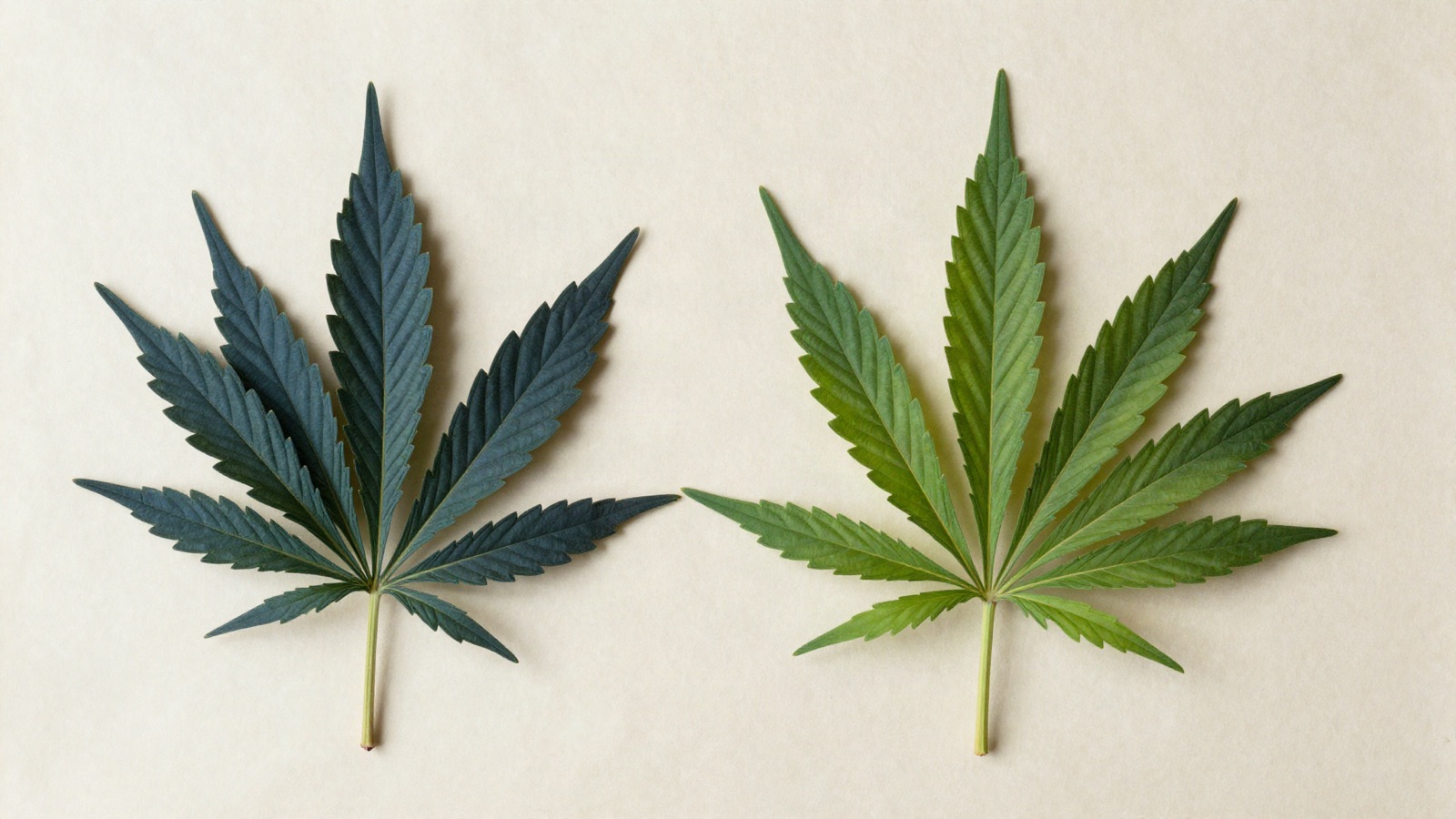
| Growth pattern | Compact and bushy, broad dark leaves | Tall and slim, narrow lighter leaves |
| Origin (landraces) | Hindu Kush region: Afghani, Hindu Kush | Equatorial: Thai, Durban Poison |
| THC content | No difference — potency depends on the strain, not the type | |
What are hybrid strains?
Time for some honesty: practically every modern strain is a hybrid. Breeders have been crossing indica and sativa lines for decades to combine aroma, potency and yield — pure landraces are the rare exception on any menu. That’s why the accurate terms are indica-dominant and sativa-dominant: they describe the direction a cross leans towards.
The Californian genetics in our range are almost entirely hybrid by design too: Gelato, Cookies and Sherbet lines deliberately merge both worlds. You’ll find balanced crosses in our hybrid category.
How much science is behind the split?
Less than the labels suggest. Chemical analyses have shown for years that strains labelled indica and sativa often barely differ in the lab — the split says more about a plant’s origin and growth habit than about its effect. What actually shapes the experience is the interplay of THC content and terpene profile in the specific strain.
In practice: the label is a decent starting point, but the better information sits in the strain description. That’s why we list aroma and effects for every strain individually — and why you can filter our range by mood instead of guessing by type.
Which strain is right for me?
- Relaxing, winding down, easier sleep: start with the indica selection and look for earthy, sweet profiles.
- Staying active, creative work, social settings: browse the sativa selection — citrus and Haze profiles are the classics here.
- Balanced or undecided: a hybrid is the safe middle path — and the category most Cali strains call home.
- New to potent buds? Start with a low dose regardless of type — modern genetics are considerably stronger than their reputation.
By the way: what THCA actually is and when it turns into THC is covered in our guide What is THCA?.
Frequently asked questions
Is indica or sativa stronger?
Neither — potency depends on the individual strain, not the type. Both indica- and sativa-dominant genetics reach well beyond 25% these days. What counts is the content stated on the product page, not the label.
Which is better for sleep: indica or sativa?
The classic recommendation is indica — myrcene-rich strains in particular are described as sleep-friendly. Individual reactions vary: if THC generally activates you, an indica won’t automatically make you drowsy.
How do you tell indica and sativa plants apart?
By how they grow: indica plants stay compact and bushy with broad, dark green leaves; sativa plants grow tall and slim with narrow, lighter leaves. On the finished bud the difference is barely visible to consumers — there, aroma and the strain listing are what count.
Do pure indica or sativa strains still exist?
Hardly. Pure lines survive almost exclusively as landraces (think Afghani or Thai) in collections and breeding projects. Whatever is sold as "indica" or "sativa" today is practically always a dominant cross.
From the SmokersCo shop
Shop Cali Weed & THC Flowers
Written by the SmokersCo team
Product knowledge from the people who source, test and ship every batch.